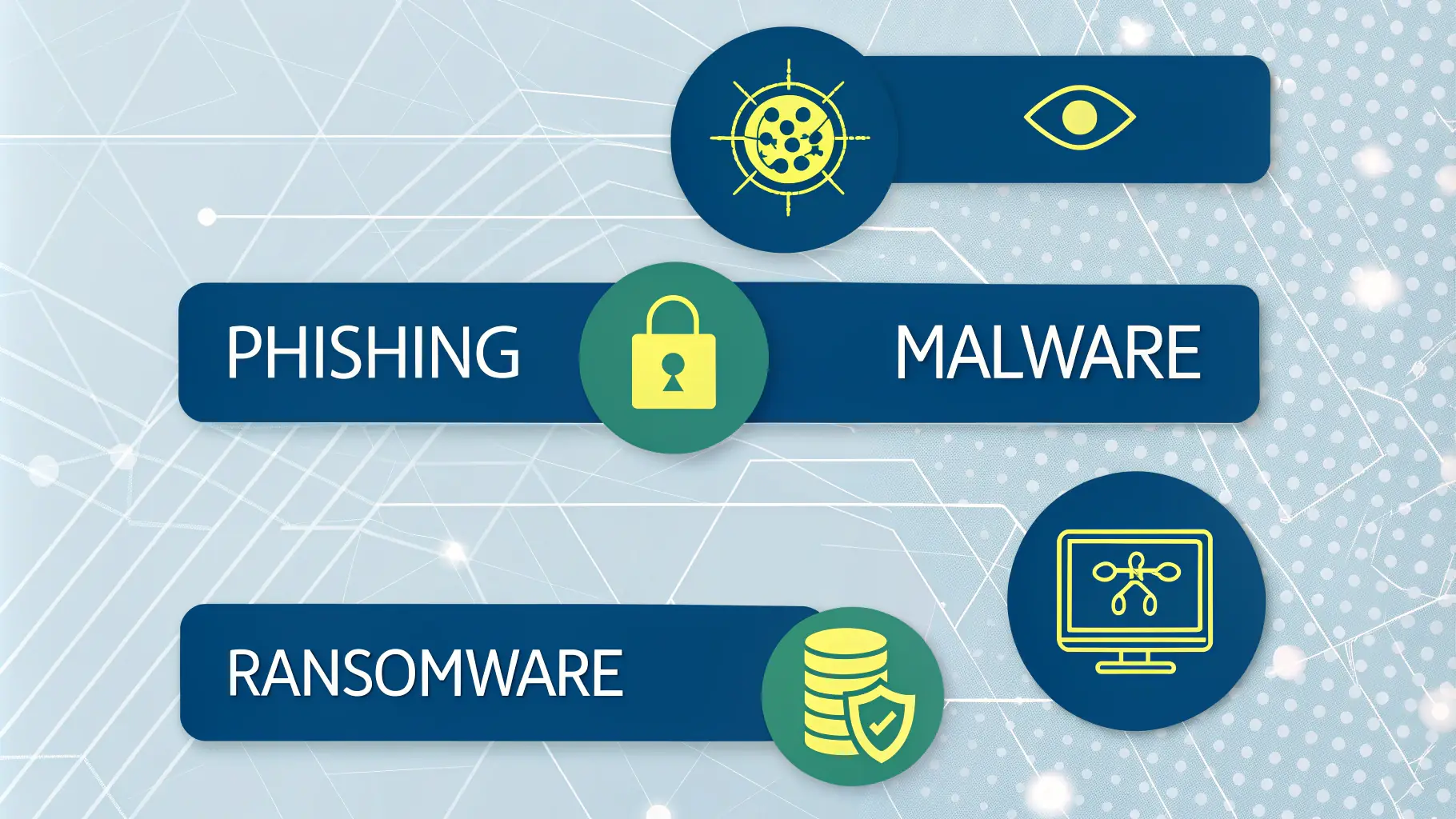
As technology continues to advance, cybercriminals are evolving their tactics to exploit new vulnerabilities and disrupt business operations. Understanding the most significant cybersecurity threats enables organizations to prioritize defenses, allocate resources effectively, and reduce overall risk. The following are five of the most critical cybersecurity threats organizations should actively monitor and address.
1. Phishing and Social Engineering Attacks
Phishing remains one of the most common and effective cyber threats. Attackers use deceptive emails, text messages, or phone calls to trick individuals into revealing credentials, financial information, or sensitive data. Social engineering attacks increasingly leverage personalization and trusted branding, making employee awareness and training essential to preventing successful exploitation.
2. Ransomware Attacks
Ransomware attacks continue to surge across all industries, encrypting systems and data until a ransom is paid. These attacks can bring operations to a standstill, result in data loss, and cause significant financial and reputational damage. Strong backup strategies, network segmentation, and timely patching are critical defenses against ransomware incidents.
3. Insider Threats
Insider threats originate from employees, contractors, or trusted partners who misuse their access, either intentionally or unintentionally. These threats can include data theft, privilege abuse, or accidental exposure of sensitive information. Implementing access controls, monitoring user activity, and enforcing the principle of least privilege help reduce the risk posed by insider threats.
4. Distributed Denial of Service (DDoS) Attacks
DDoS attacks overwhelm networks, applications, or services with excessive traffic, rendering them unavailable to legitimate users. These attacks can disrupt operations, impact customer trust, and serve as a diversion for more targeted intrusions. Proactive monitoring, traffic filtering, and scalable infrastructure are key to mitigating DDoS risks.
5. Software and Application Vulnerabilities
Unpatched or misconfigured software remains a frequent entry point for attackers. Cybercriminals actively scan for known vulnerabilities in operating systems, applications, and third-party components. Regular patching, vulnerability assessments, and secure configuration management are essential to minimizing exposure and maintaining a strong security posture.
At D2S, we help organizations proactively address these threats through comprehensive cybersecurity services, including risk assessments, security awareness training, and incident response planning. By staying informed, implementing layered defenses, and continuously improving security practices, organizations can significantly reduce their risk and remain resilient in the face of evolving cyber threats.